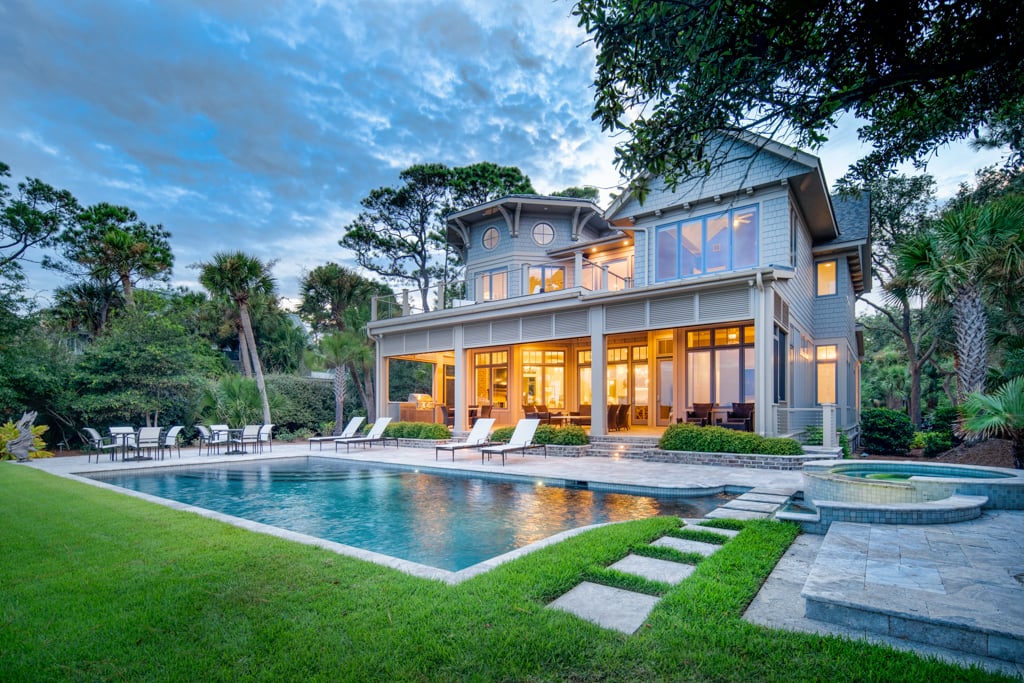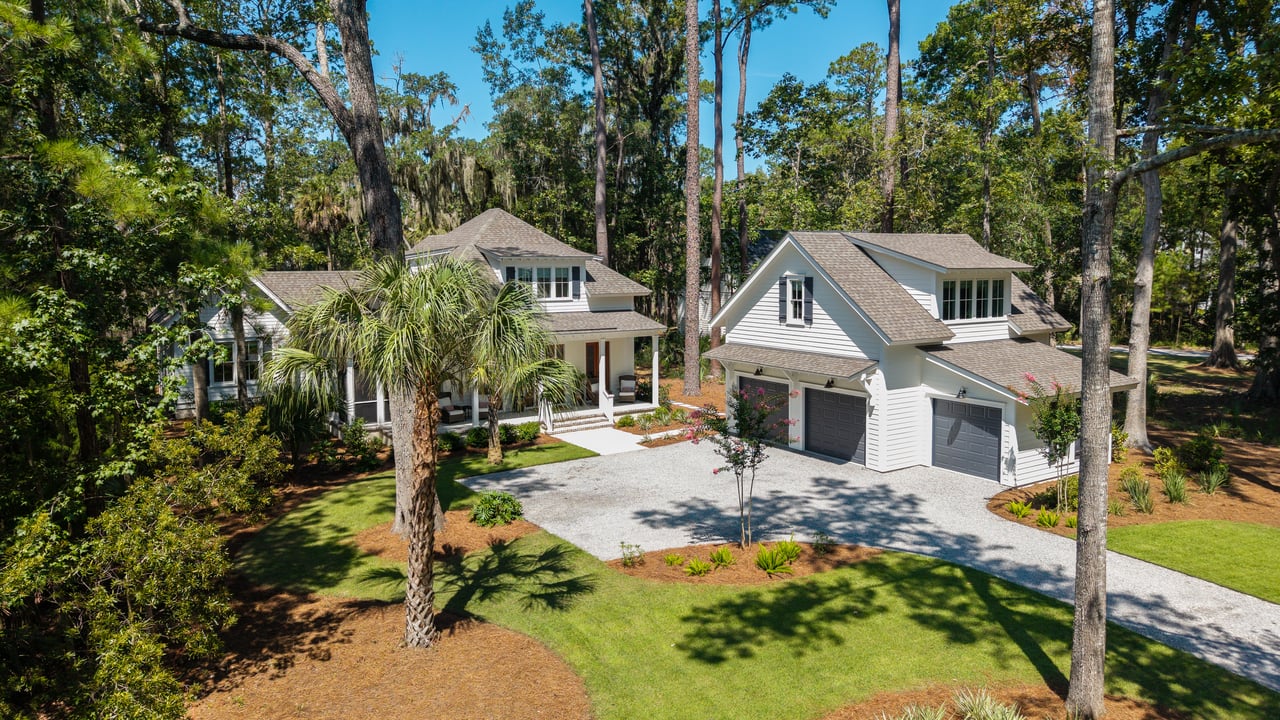
A four-bedroom estate on Oakland Place is listed at $1,450,000. A comparable home two fairways away closed in the mid-$1.6Ms this spring. Read only the portals and Berkeley Hall looks like an ordinary Bluffton comp exercise: pick your lot, pick your finishes, argue about price per square foot.
That reading is wrong, and the mechanism that makes it wrong is not visible in any MLS field. Every home and homesite inside the gate carries a mandatory, transferable equity membership in the member-owned club, and the transfer cost of that membership stepped up sharply last year. Two houses at the same list price can carry a six-figure gap in true entry cost, and the club's ongoing capital reinvestment is quietly doing more to defend resale than any interior renovation the seller can point to.
Start With the Friction: The Initiation Cliff of March 2025
The single most important number in a Berkeley Hall offer conversation is one you will not find on the listing sheet. A current community guide lists the recurring annual equity membership fee at $26,714 per year, and the transfer or initiation fee was $90,000 until March 1, 2025 and $115,000 after that date. That is a $25,000 step-up embedded in the closing math, and it applies to buyers, not sellers.
The word "transfer" matters. Every home and homesite (554 total) includes a Berkeley Hall family membership that transfers with the sale or resale of the property, and the number of Equity Members is limited to 554. A buyer is not choosing whether to join. The membership is stapled to the deed. What is negotiable is who writes the check for the transfer fee.
Read a handful of Berkeley Hall listings and you will see three different treatments in three different sentences: the seller pays the buyer's initiation, the list price already includes the seller's contribution, or the first year of dues is bundled in. Same club, same fee schedule, three very different net-cost outcomes. This is where a buyer's underwriting has to slow down.
What the Sticker Actually Excludes
The list price is a partial quote. To make a Berkeley Hall home comparable to a home in a neighboring club community, four line items need to sit on the same page.
| Cost component | Berkeley Hall (current public figures) | Colleton River (full) | Hampton Hall (required social) |
|---|---|---|---|
| Annual dues | ~$26,714 | $31,542 | $6,372, includes HOA and social amenities |
| One-time buy-in | $115,000 initiation as of March 1, 2025 | $125,000 capital contribution | $35,000 one-time membership fee plus $1,593 capital fund contribution |
| Membership tied to property? | Yes, mandatory equity transfer | Yes | Social required; golf separate |
| Membership cap | 554 property-owner equity slots | Not disclosed publicly | Not disclosed publicly |
The comparison is not "which club is cheaper." Hampton Hall's social-first structure separates the golf decision from the ownership decision, which is a different product. Colleton River's dues are higher but its capital contribution is close to Berkeley Hall's post-March 2025 number. Berkeley Hall sits as a middle point in the local private-club landscape, with a recurring annual cost that appears higher than Hampton Hall's required social structure and lower than Colleton River's full membership dues, while the one-time entry cost remains a major six-figure consideration.
The insight for a buyer is this: the sticker price is doing less comparative work than it appears to. A $1.6M Berkeley Hall home and a $1.6M Colleton River home imply different total cash at closing and different annual carry. Price per square foot is a coarse filter here. Total-cost-of-entry is the finer one.
The Hidden Mechanism: Capital Reinvestment as Resale Insurance
Member-owned clubs behave differently from developer-owned ones. When members vote to invest in the physical plant, they are voting on their own dues and their own home values at the same time. In Berkeley Hall's case, that vote has been consistently yes, and the schedule is public.
The club's approach to its 25th anniversary is not a party. It is a construction plan. According to LINKS Magazine, the club recently underwent extensive enhancements to its clubhouse including a complete kitchen renovation as well as a $5 million renovation to the North golf course, and has announced plans for a state-of-the-art Spa & Fitness Center. The architects behind the fitness plan are Chambers USA, and their public project brief describes the scope in concrete terms: the existing 9,890 square foot building will receive reconfigurations, expansions, and aesthetic renewal, with the campus expanded by an additional 1,930 square feet to accommodate the demand for diverse fitness and wellness experiences.
This matters to a buyer for a specific reason. In a community with a hard cap of 554 property-owner memberships and low-density design at 5.3 homesites per hole, resale value is not purely a function of the individual home. It is a function of the club's condition, its debt position, and its ability to attract the next generation of members. Members told the board what they wanted during the last master-plan phase, and the response was direct.
"Board and management are committed to meeting the evolving demands of our membership by investing in our future," said Keith Patten, Board President, at the time of the earlier Phase I of the club's master plan.
Continuous reinvestment funded by members is a different resale story than a private community waiting on a developer's next move. It is also why the initiation-fee increase is defensible on the buy side. The number went up because the plant is being upgraded. A buyer paying $115,000 in 2026 is buying into a physical amenity set that was not fully in place at the $80,000 fee level several years ago.
Reading the 2026 Market Through This Lens
The raw market data, taken alone, tells a modest story. As of April 2026, the median sale price in Berkeley Hall was $1,581,500 with homes sitting an average of 78 days on the market, and the trailing twelve-month median was $1,600,000, up roughly 7 percent year over year. May 2026 showed 15 active listings with a median list of $1,495,000 and an average of 120 days on market. New construction is landing in that same band, with the first Dogwood plan debuting at 86 Clifton Drive on a wooded homesite and a Magnolia elevation completed at 80 Clifton Drive at 3,761 square feet.
Longer days on market than the national average are not a warning sign in a community like this. They are a function of thin inventory, high absolute price points, and buyers who need to underwrite the club as well as the house. The transaction is more complex than a suburban resale, and the timeline reflects that.
Two second-order signals are worth watching. First, the March 2025 initiation-fee step-up creates a natural before-and-after in the resale math. Sellers who closed in early 2025 sold into a $90,000 buyer-side transfer market. Sellers closing in mid-2026 are selling into a $115,000 market. Whether that shows up as a headwind or as pricing power depends on how the seller is willing to structure the initiation-fee contribution. Second, the ongoing Spa and Fitness build-out is the kind of concrete near-term amenity story that gives a buyer's agent something to point at during a comparison shop against nearby communities.
Questions to Ask Before You Sign
The Berkeley Hall buy is more than a house inspection. The offer conversation should include the club as its own diligence track.
- Confirm the current initiation-fee schedule directly with the Membership Office, in writing, dated. Older PDFs circulate online and can be twelve to eighteen months stale.
- Ask which party is paying the transfer fee, and whether the answer is baked into the list price or handled as a closing credit.
- Ask whether the first year of dues is included, and if so, at what dollar value.
- Ask about pending or approved capital assessments tied to Phase II work and the Spa & Fitness Center expansion.
- Confirm the definition of "family" for the equity membership, including any age cutoff for adult children.
- Review the resignation and resale language on the membership itself. Equity refundability rules vary by club and can affect how the fee is characterized in a future sale.
- Match the closing date to the club's billing cycle so dues are prorated cleanly.
None of these questions is exotic. They are simply the ones that get skipped when a buyer treats a member-owned club community like a standard HOA neighborhood.
Frequently Asked Questions
Is membership actually mandatory, or is there a social-only tier for owners? Ownership carries an equity membership by design. The club offers a separate, limited category of non-equity memberships for non-property owners, but a property purchase inside the gate transfers the equity family membership with the deed. Confirm current categories with the Membership Office before you write.
Why did the initiation fee jump so much on March 1, 2025? The step from $90,000 to $115,000 followed a period of concentrated capital investment, including a $5 million North Course renovation, clubhouse and kitchen upgrades, and the announced Spa & Fitness Center project. Higher initiation fees are the typical funding mechanism in member-owned clubs when the amenity plant is being upgraded.
How should I compare a Berkeley Hall $1.5M home to a similar-priced home in Colleton River or Hampton Hall? Build a five-year total-cost model that adds the one-time initiation or capital contribution to five years of dues and any known assessments. On paper, three homes at the same list price can carry entry-and-carry gaps of $200,000 or more once the club structure is properly loaded in.
Berkeley Hall rewards buyers who read past the list price. If you are weighing a purchase inside the gate, or comparing it against Colleton River, Belfair, or Hampton Hall, The Agency Hilton Head will walk the club schedule, the current fee posture, and the resale math with you before you write the offer. Request a Complimentary Market Valuation and we will build the comparison your portal search cannot.