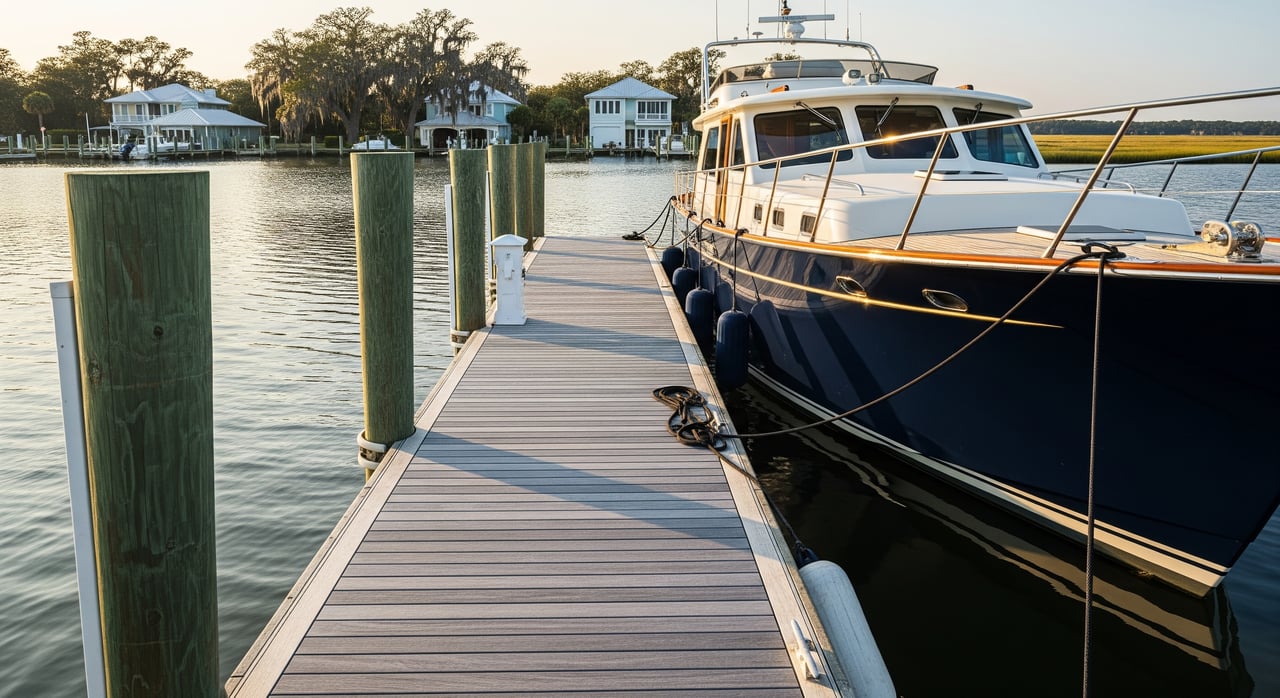
Do you picture weekends spent casting off at first light, hopping to a waterside lunch, then catching sunset on the return? If so, the community you choose matters as much as the boat you buy. You want reliable access, the right marina support, and a lifestyle that matches how you use the water.
This guide compares Windmill Harbour and Moss Creek through a boater’s lens so you can decide which is the better fit for your needs. You will learn how to evaluate access, marina services, rules, costs, maintenance, and storm readiness, plus the exact questions to ask before you buy. Let’s dive in.
What matters most to boaters
Picking between two great waterfront communities can feel like splitting hairs. Focus on the factors that affect your time on the water and long-term costs.
- Access and depth at mean low water
- Proximity to the Intracoastal Waterway and Port Royal Sound
- Marina services, haul-out options, and fuel/pump-out
- HOA and marina rules that affect usage
- Slip availability, fees, and transfer rules
- Dredging history and future plans
- Hurricane plans and insurance requirements
The Beaufort and Port Royal Sound area features an estuarine network of tidal creeks and rivers. The South Carolina coast sees semidiurnal tides with a moderate range. Always confirm depths and currents for your route with NOAA Tides & Currents, and check Local Notices to Mariners for any shoaling or aids-to-navigation changes.
Windmill Harbour at a glance
Windmill Harbour is often presented as a yacht-forward, marina-centered community. Many boaters value the organized docking environment, security, and an active boating culture that supports larger cruising vessels.
- Likely strengths: robust marina operations, yacht-friendly amenities, and convenient access to popular cruising routes.
- Possible tradeoffs: higher ownership and slip costs, demand for larger slips, and the potential for special assessments tied to marina maintenance or dredging.
Verify the exact channel approach, controlling depth at mean low water, and any fixed-clearance limits with marina management before you commit.
Moss Creek at a glance
Moss Creek is often known as a golf-and-water lifestyle community with marina facilities that support inshore cruising, fishing, and family day boating.
- Likely strengths: strong community amenities, a social boating scene, and convenient day-trip access to local creeks and waterside destinations.
- Possible tradeoffs: fewer or smaller slips for larger yachts, limited on-site repair resources, and more tide-aware planning for deeper-draft boats.
As with any tidal Lowcountry marina, confirm the approach depths, any seasonal shoaling, and service availability with the harbormaster.
Access and navigation
For many owners, access is the deciding factor. Shorter, deeper, and more direct routes to marked channels reduce stress and increase time underway.
- Waterbody and route: Identify the exact waterbody each community fronts and the route to a marked channel on the Intracoastal Waterway or Port Royal Sound.
- Depths at mean low water: Ask for recent soundings and an approach profile. Know the controlling depth along the whole route, not just at the slip.
- Currents and timing: Semidiurnal tides can limit passage for deeper-draft boats. Plan windows with NOAA tide predictions for nearby stations.
- Bridges and obstacles: Note any fixed bridge clearances and known shoal areas. Review recent U.S. Coast Guard Local Notices to Mariners.
Marina features and services
Your maintenance plan should match how you use your boat. Confirm what is on site versus nearby.
- Slips: Ask about length, beam, power options, and water. Verify whether transient or guest slips are available.
- Fuel and pump-out: Clarify the presence of gasoline, diesel, and pump-out services, plus hours and seasonal schedules.
- Haul-out and repairs: Identify the nearest travel lift capacity, bottom services, and certified mechanics for engines, electrical, and rigging.
- Security and staffing: Learn about gated access, dock staff hours, and any winter-watch programs.
- Extras: Dry storage, trailer parking, launch ramps, Wi-Fi on the docks, and onsite chandlery can simplify ownership.
Rules and governance
HOA and marina policies shape how you use your boat and what you can keep at the dock.
- Slip ownership model: Some communities offer deeded slips. Others lease long term or by season. Ask about transfer rules when buying a home.
- Usage policies: Confirm liveaboard limits, guest docking rules, dinghy storage, lifts or davits, and wake or speed policies inside the basin.
- Fees and billing: Separate the HOA dues from marina fees. Ask how utilities are metered and billed.
Costs and availability
The best marina for you is the one you can reliably use and afford over time. Focus on actual numbers from management.
- Waitlists: Large or deepwater slips can have long waitlists. Get current estimates in writing.
- Fee structure: Learn about any initiation fees, slip purchase costs, and ongoing maintenance charges.
- Operating costs: Expect insurance proof requirements and ask about typical haul-out rates and transient guest fees.
Maintenance and dredging
Tidal systems shift. Communities that plan for maintenance protect both access and property value.
- Dredging history: Request the date of the last dredge, frequency, and who pays for it. Review public permits where available.
- Channel responsibility: Clarify whether the HOA, marina, county, or federal agencies maintain the approach channel.
- Environmental permits: Dredging, dock work, and shoreline projects require permits from state and federal agencies. Verify current status.
Safety and hurricane planning
A clear storm plan is essential for boat and home insurance in coastal South Carolina.
- Written hurricane plan: Ask for the official marina and HOA procedures, including haul-out priority or evacuation guidance.
- Insurance: Confirm hull and liability insurance limits required for slip holders. Check that insurers write policies for the location.
- Flood risk: Review Beaufort County and FEMA flood maps to understand elevation, surge exposure, and any impacts on premiums.
Lifestyle and community
Boating is about more than logistics. Communities with active clubs and events help you meet cruising partners and share local knowledge.
- Clubs and events: Find out if there is a yacht club, fishing tournaments, or organized cruises.
- Social destinations: Map out nearby restaurants with dockage, provisioning stops, and marinas you will visit often.
- Typical use: Decide whether you want offshore runs, overnight cruising, or mainly inshore days. Choose the marina that best supports that pattern.
Quick comparison checklist
Bring this list when you tour Windmill Harbour and Moss Creek. Ask for written answers.
- Access and navigation
- Waterbody fronted and route to a marked channel
- Controlling depth at mean low water to the slip
- Any fixed bridges or clearance limits
- Tidal windows or current considerations
- Marina features and services
- Slip sizes, power service, and guest docks
- Fuel types and pump-out availability
- Haul-out options and travel lift capacity nearby
- Wi-Fi, lighting, security, and staffing hours
- Governance and costs
- Slip ownership or lease model and transfer rules
- Current fee schedule and utility billing
- Waitlist length by slip size
- HOA policies on lifts, dinghies, and liveaboards
- Maintenance and reliability
- Date of last dredge and frequency
- Active permits and who maintains the approach
- Safety and insurance
- Written hurricane plan and storm procedures
- Insurance requirements and proof needed
- Services and support
- Nearest mechanics, parts suppliers, and boatyards
- Closest public ramps and transient marinas
- Transit times to restaurants and provisioning
- Community and culture
- Active boating club or cruise calendar
- Guest dock policies for visiting friends and family
How to choose the right fit
- Define your boating style. Offshore runs or inshore exploring. Day trips or overnights. Power, sail, or both.
- Match draft and size to access. Use NOAA tide predictions and ask for an approach profile at mean low water.
- Confirm services you will use. Fuel, pump-out, and haul-out availability should fit your maintenance plan.
- Model total cost of ownership. Combine slip costs, insurance, expected haul-outs, and potential dredging assessments.
- Stress-test storm plans. Review hurricane procedures, response timelines, and any priority haul-out programs.
- Get it in writing. Ask the marina and HOA for spec sheets, fee schedules, and policies before you make an offer.
When you are ready, walk the docks at low and high tide with the harbormaster. It is the fastest way to confirm clearances, currents, and daily rhythms.
Work with a local advisor
Choosing between Windmill Harbour and Moss Creek comes down to how you boat and what support you expect from your home marina. Both deliver classic Lowcountry waterways and quick access to inshore and coastal adventures. With the right questions and local guidance, you can buy with confidence and spend more time on the water.
If you want a tailored comparison, recent fee schedules, and introductions to marina staff, connect with our team at The Agency Hilton Head. We will align your boating goals with the right community and property.
FAQs
What should boaters compare between Windmill Harbour and Moss Creek?
- Focus on controlling depths at mean low water, approach routes to marked channels, marina services, slip availability, rules, dredging history, and hurricane plans.
How do tides affect marina access in the Beaufort area?
- The coast has semidiurnal tides with a moderate range, so deeper-draft boats may need tide windows; confirm local predictions with NOAA before transiting.
What slip ownership models should I expect in these communities?
- Communities may offer deeded slips, long-term leases, or rental-only models; ask about transfer rules, waitlists, and separate marina versus HOA fees.
How can I verify depths and navigation conditions before buying?
- Request recent soundings and an approach profile from marina management, review NOAA charts, and check U.S. Coast Guard Local Notices to Mariners for updates.
What services should I confirm on site or nearby?
- Verify fuel types, pump-out availability, haul-out capacity, certified mechanics, dock power options, and whether guest or transient slips are allowed.
How should I evaluate hurricane readiness and insurance requirements?
- Ask for the written hurricane plan, haul-out procedures, and insurance limits required for slip holders, and review local flood maps for surge exposure.