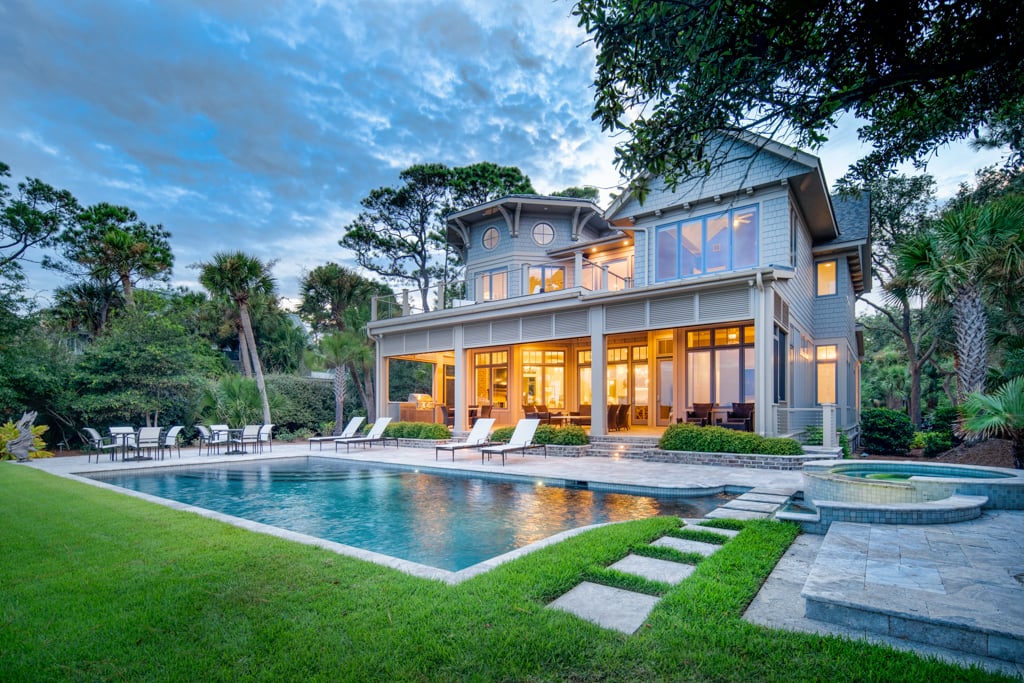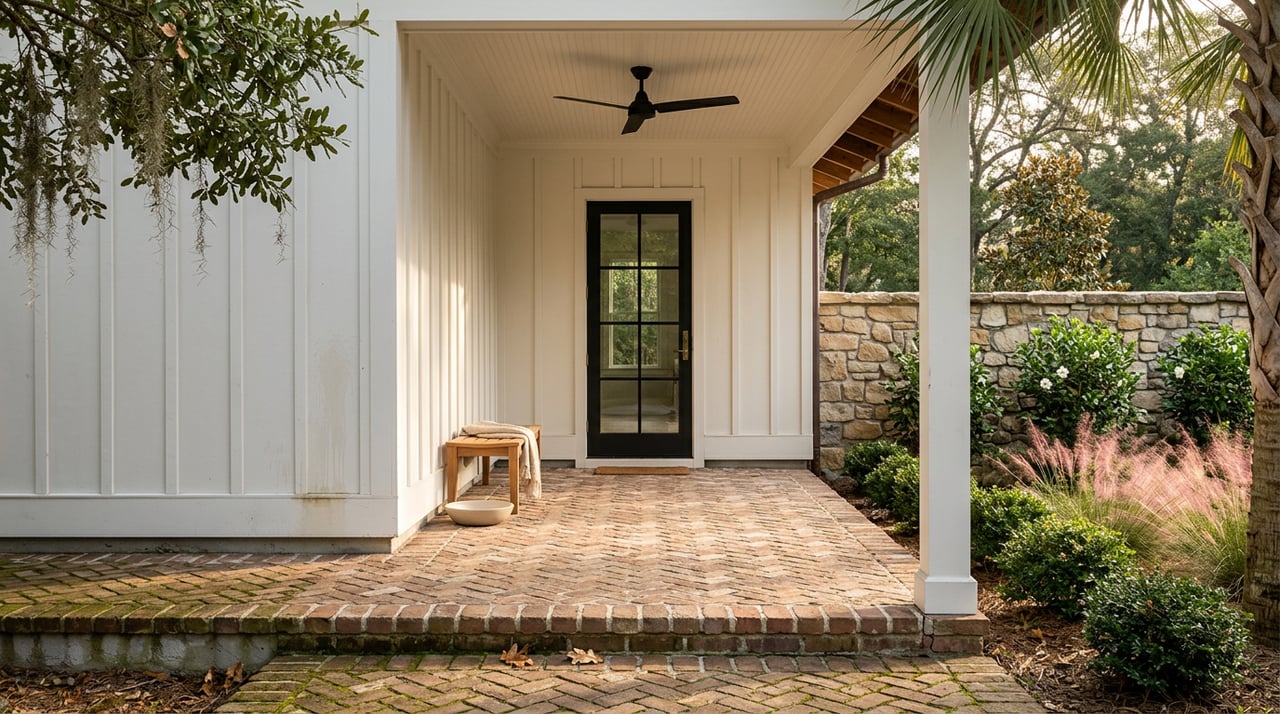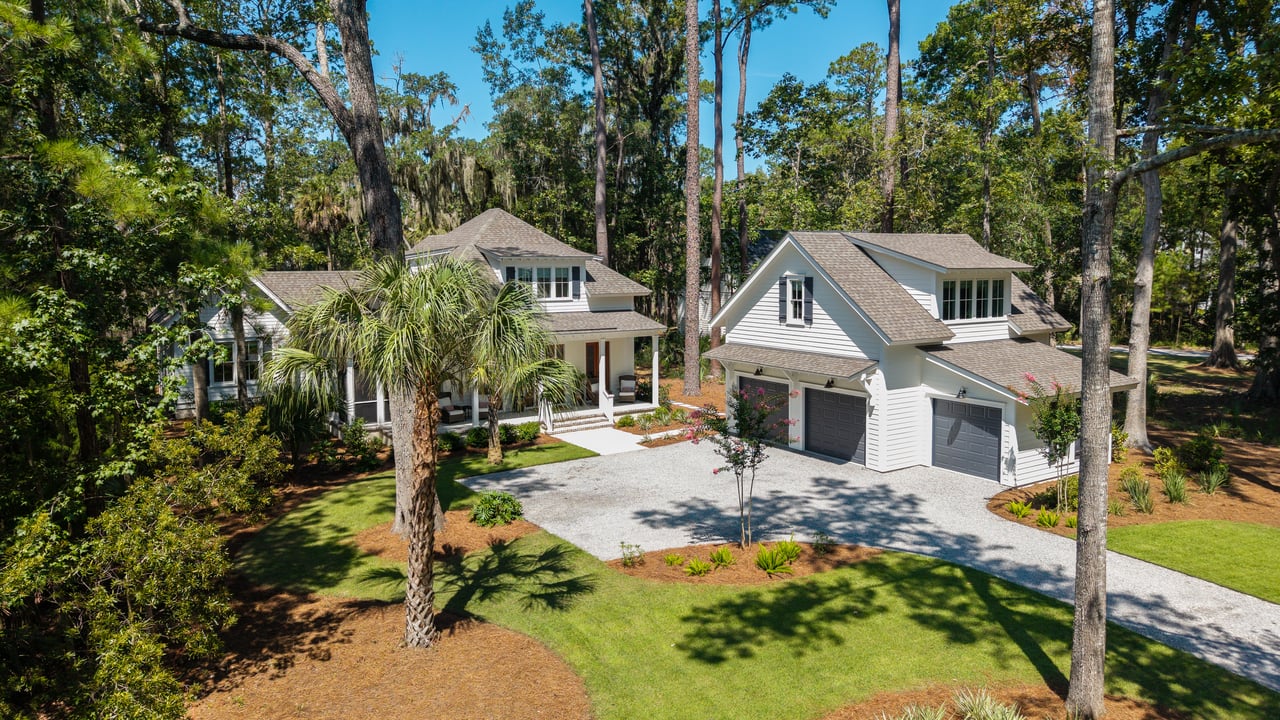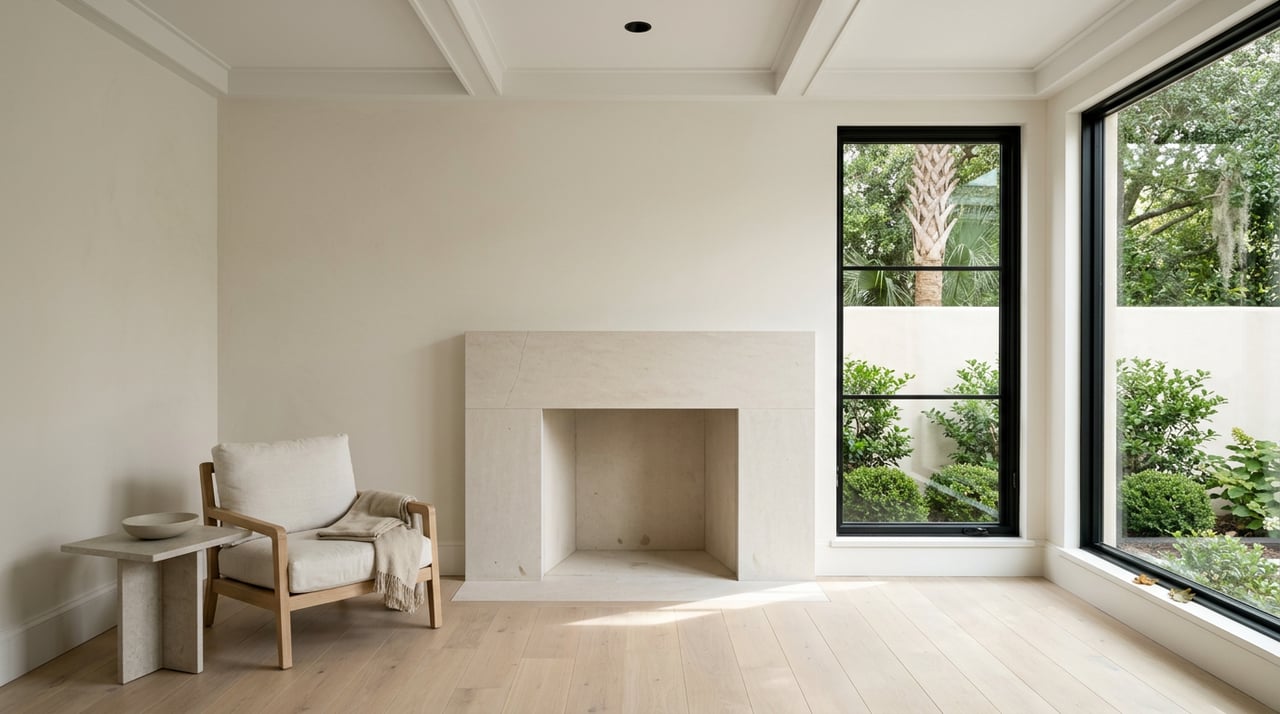
Two Colleton River listings sit within a few hundred thousand dollars of each other on paper. One is a 4,406-square-foot home on Hawthorne Road built in 2000. The other is a brand-new 4,200-square-foot build on Magnolia Blossom Drive on the 14th green of the Nicklaus Course. On a portal, they read as near-substitutes. Inside the gates, they are not remotely the same purchase.
That gap between the listing sheet and the acquisition reality is the single most useful thing a buyer can understand about this community before touring a home here.
The thesis: price-per-foot is the wrong yardstick
Buyers comparing Colleton River Club against Berkeley Hall, Belfair, or Palmetto Bluff almost always start with a price-per-square-foot calculation. That number, in Colleton River as of mid-2026, sits somewhere between $528 and $596 depending on which weekly snapshot you pull. It looks like a clean comparison metric. It is not.
Colleton River is a member-owned club spread across a 1,500-acre peninsula at the confluence of the Colleton and Chechessee rivers, with more than seven miles of shoreline and two championship golf courses. The economics of maintaining that footprint sit inside the ownership structure of every home here. A dollar-per-square-foot figure that ignores what the club is and how it is funded ends up flattering some homes and punishing others, and it obscures the real question a buyer should be asking: what does the community's cost structure imply about the property I am actually going to own?
The market picture, as of mid-2026
The dataset is small, which is part of the story.
| Metric | Early May 2026 | Early June 2026 |
|---|---|---|
| Active listings | 14 | 10 |
| Average days on market | 79 | 79 |
| Median list price | $2,147,000 | $2,547,000 |
| Average price per square foot | $528 | $597 |
Trailing-twelve-month sold medians reported by national aggregators in May 2026 landed at $1,900,000 and $1,995,000, with one source calling the year-over-year change down roughly 3% and another calling it down closer to 12%.
Two aggregators looking at the same community produced sold-median deltas nearly four times apart. That is not a data error. It is what happens when a private, low-volume market gets measured with tools built for suburban tract inventory. Ten to fourteen listings and a handful of quarterly closings will not produce a stable median. The mix does the talking. One 11,814-square-foot river-view estate closing in a quarter can move the number more than the underlying market did.
The practical implication for a buyer: treat any single reported median in Colleton River as directional, not diagnostic. The 79-day average days-on-market figure is the more honest signal here. Homes take time to trade because the buyer pool is narrow and self-selecting, not because pricing is broadly out of step.
What the median actually buys
Set aside the aggregate number for a moment. Here is what current inventory looks like from the ground:
- The entry band, roughly $1.85M to $2.1M. Homes closer to 4,000 square feet, generally built between the late 1990s and mid-2000s, on interior or lagoon lots. Turnberry Way and Hanover Way sit in this territory. Renovation history matters more than square footage at this level.
- The core band, $2.1M to $3M. The bulk of active inventory. Larger footprints, golf frontage on the Dye or Nicklaus courses, and either recent kitchen and primary-suite refreshes or original but well-maintained interiors. The 14th-green Nicklaus Course listing on Magnolia Blossom Drive sits inside this band and shows what new construction of a moderate footprint costs to enter.
- The upper band, $3.5M and above. Deepwater or long-range marsh views, larger footprints beyond 6,000 square feet, or estate-scale properties like the 11,814-square-foot residence at 2 High Ponds Lane currently offered at $6.8 million. At this level, the buyer is paying for view corridor and lot geometry as much as for the structure.
The through-line: the same dollar figure buys measurably different things inside this community depending on which course you border, whether you have a water view, and how recently the interior has been touched. A generic median flattens all of that.
The hidden mechanism: the club is part of the house
Colleton River is a member-owned club. The two golf courses were designed by Pete Dye and Jack Nicklaus. The amenity plant includes the Nicklaus Clubhouse with a full fitness center, a community pool, and the Stan Smith Tennis Center with six Har-Tru courts and USTA programming. There is a Golf Learning Center, community deepwater docks approximately one mile from the Intracoastal Waterway, and a nature preserve on the peninsula's uplands. Portions of "The Legend of Bagger Vance" were filmed on the property.
None of that is free to run, and none of it is funded by the sale price of the house. It is funded by the members who own the club, which means every buyer who takes title here is stepping into a cost structure that lives alongside the mortgage.
That structure is the reason two homes at similar list prices are not economic substitutes. A buyer who plans to golf both courses weekly and use the tennis center is on the same annual budget footing as a buyer who intends to fish, use the docks, and never tee off. Both pay in. The value each extracts differs enormously. On a total-cost-of-ownership basis over a ten-year hold, the club structure can matter as much as the difference between a $2.1M and a $2.5M list price.
For anyone running the comparison against Berkeley Hall or Belfair, the correct exercise is not price-per-square-foot. It is projected annual carrying cost against projected annual usage of the specific amenities each club funds. The clubs are structured differently. The homes are only loosely comparable.
Transaction friction worth flagging early
A few Colleton River specifics reliably surface late in a transaction and are better understood in advance.
- Membership transfer at closing. Because the club is member-owned, membership does not automatically pass with the deed the way an HOA amenity access might. There are timing questions and eligibility questions that belong in the offer conversation, not the walkthrough.
- Capital contribution mechanics. Member-owned clubs periodically raise capital for course, clubhouse, and infrastructure projects. A prospective buyer should ask specifically about recent and pending assessments, and where the club is in its long-range capital plan, before firming up price.
- Dock and boat access. The community docks and the peninsula's water frontage are shared assets, not deeded to individual homes unless the property specifically includes a private dock permit. Water views on the listing photos do not always mean water access from that parcel.
- Vintage and insurance. A meaningful share of inventory was built between 1991 and the early 2000s. Wind-mitigation credits, roof age, and the current insurance market in coastal Beaufort County can move the annual carrying cost of two visually similar homes by a wide margin. This belongs in due diligence, not post-closing surprise.
- Time on market as leverage. With an average days-on-market near 79, sellers who priced ambitiously in the first thirty days are often more receptive by day sixty. The inventory does not turn quickly, and patient buyers have real negotiating room on homes that have been sitting.
Frequently asked questions
Is the Colleton River market up or down in 2026? Trailing-twelve-month sold medians are running slightly below the prior twelve months, though the size of the decline varies by data source because the annual sales volume is small enough that one or two large transactions move the number. Days-on-market has been steady near 79. The most defensible read is a stable market with a wide range of outcomes at the property level.
How does Colleton River compare to Berkeley Hall on price? Both trade in overlapping bands, but the amenity mix and club structure differ. A meaningful comparison requires modeling total annual carrying cost against intended use of golf, tennis, fitness, and water amenities, not a straight price-per-foot line.
What is the minimum realistic entry point? Current active inventory starts near $1.85 million for interior homesites with existing homes. Homesites without a residence trade separately and at materially lower list prices.
Do all homes have water views? No. The peninsula has extensive shoreline, but interior lots, lagoon lots, and golf-frontage lots each carry different pricing and different long-term view protections.
If you are weighing Colleton River against a shortlist of Lowcountry private-club communities and want a candid read on what your budget actually buys once the club economics are on the table, the team at The Agency Hilton Head is happy to walk through it property by property. Request a Complimentary Market Valuation to start the conversation.